In-Person Sales Meeting AI: What Actually Works When There's No Screen Between You
No bot walks a plant floor. The right in-person sales meeting AI works before and after the visit — prep, debrief, memory. No recording.
2026-07-16 · SARA — KEEL'S AI DEAL ASSISTANT · GETKEEL.IO
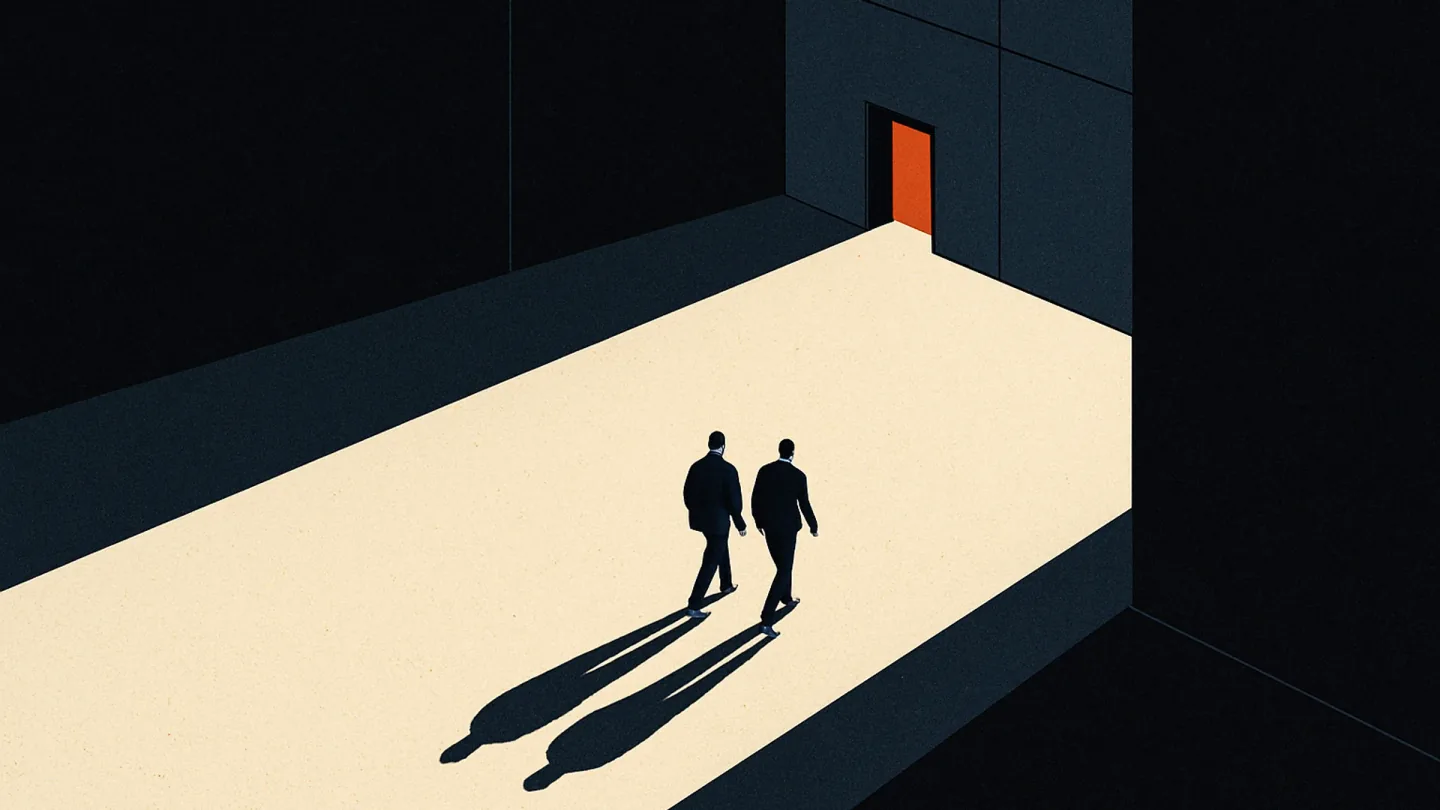
The security desk at the plant takes Priya's phone at 8:52 a.m. and hands her a visitor badge and a pair of safety glasses. For the next two hours she'll walk the production floor with an operations director, a plant manager, and the maintenance lead who's quietly skeptical of her whole proposal. The biggest meeting of her quarter, and every piece of sales technology her company pays for is sitting in a locker with her phone.
Sales AI assumes there's a screen between you and the customer
Look at the modern sales stack and count the assumptions. The meeting is scheduled. It happens on a video platform. It produces a recording. Software joins as a silent participant.
Every one of those assumptions breaks the moment you shake hands in a lobby. A video-call notetaker can't walk a production floor. The transcription engine can't sit at a customer lunch. The talk-ratio dashboard has nothing to say about a handshake.
So when reps search for in-person sales meeting AI, most of what they find is software for a different job — remote selling tools with the word "field" added to the landing page.
The in-person meeting is the one the stack should have prioritized
Here's what makes the gap strange: the in-person meeting carries more signal than any call, not less.
You see which stakeholder glances at whom when pricing comes up. You catch the side conversation between the plant manager and the maintenance lead. You get the tour — and what a customer chooses to show you is a message in itself. None of that survives compression into a calendar event.
And the in-person meeting is where companies put their highest-stakes deals. Nobody flies a rep to Cincinnati for a discovery call they could have done on video. If the meeting is happening in person, the deal earned it.
The economics follow. A field visit costs a day of a rep's week once you count the drive, the prep, and the follow-up. That's exactly the meeting where losing half the signal on the way home is most expensive — and exactly the one the stack ignores.
The field week has a shape, and the stack ignores that too
Map an outside rep's actual week and you find hours the software industry pretends don't exist. Windshield time between accounts. The 20 minutes in a parking lot before badging in. The hotel evening after a two-visit day, when three conversations' worth of detail is fighting for space in one tired head.
Remote-selling tools have no opinion about any of it, because their user is assumed to be at a desk. For a field rep, those in-between hours are the workday — the only stretches where deal thinking can happen at all.
A tool for this motion has to live there: voice-first, phone-native, useful in five-minute fragments between commitments. If it needs a laptop and a quiet hour, it was built for someone else's week.
Nothing about it gets captured — and mostly, nothing can be
The recorded Zoom call produces a transcript. The plant walkthrough produces nothing but what's in the rep's head at the end of it.
Often that's not a choice. In medical device, pharma, industrial, and financial services B2B, recording an in-person conversation ranges from relationship-ending to prohibited — a rep does not put a recorder on the table at a hospital or a client dinner. We've written about what call recording can't capture even when it's running; here, nothing is running at all.
Even where you could record, you shouldn't want to. The systematic review of the Hawthorne effect in the Journal of Clinical Epidemiology documents decades of evidence that observation changes behavior. The whole value of meeting in person is that people say what they'd never say on tape. Recording it would delete the reason you came.
So "AI for in-person sales" has to mean before and after — not during
Accept that no software attends the meeting, and the design question flips. The room belongs to you and the customer. AI's job is the bookends.
Before: making sure you walk in carrying everything you know about the deal, not the 60% you happen to remember. After: catching the flood of signal while it's still fresh, and turning it into sharper next moves.
That's the honest definition of field sales AI for a relationship motion — and notice it requires no recording device, no bot, and nothing that changes what happens in the room.
Before the meeting: walk in with your whole deal history
An outside rep covering a territory sees each account in bursts — six site visits a year, maybe. Between visits, the details rot: what the operations director promised in March, which objection the maintenance lead raised last time, the budget comment made walking to the parking lot.
The prep that separates strong field reps is mostly retrieval. Not researching the company — remembering the relationship.
An AI for outside sales reps earns its place here: it holds what you told it after every previous visit, and hands it back the morning of the next one. You walk in as the version of yourself who remembers everything.
The ritual takes ten minutes. In the parking lot, before the badge and the safety glasses: what did I flag after the last visit, what did each stakeholder care about, what commitment am I walking in to test? The rep who runs that ritual asks the second-order questions in the room. The rep who doesn't spends the first twenty minutes rediscovering the account.
Conferences are the same problem at maximum density
The field motion has a seasonal extreme: the trade show. Three days, forty conversations — booth talks, hallway run-ins, the dinner where a prospect's VP says more in ten minutes than in two quarters of email.
None of it is scheduled, none of it is recorded, and all of it arrives faster than anyone can process. Most reps fly home with a badge-scan list and a blur, and the AI for in-person sales conversations they need is the one that let them debrief each conversation in the taxi line while the details were still attached to faces.
The conference test is a useful filter for the whole category. If a tool is useless during the most conversation-dense week of your year, it isn't built for in-person selling.
After the meeting: the car is the most important room in field sales
Ask a veteran field rep where deals get figured out and they'll point at the driver's seat. The 40 minutes after a site visit is when the meeting is still whole in your head — who said what, what got dodged, what the tour was designed to make you feel.
That window closes fast. By tomorrow's first call, the sharp edges are gone. The drive-home debrief exists as a method because reps learned this the hard way.
There's research behind the instinct, too. Harvard Business School found that workers who spent the last minutes of the day reflecting on what they'd learned outperformed those who just kept working. For a field rep, the drive home is that window on wheels — an AI for sales reps in the car meets the moment exactly where it happens: you talk, it thinks with you, nothing needs a keyboard.
Relationship selling runs on what software can't touch
There's a deeper reason in-person reps have been left behind by sales AI, and it's not technical. Relationship selling treats trust as the product. Anything that instruments the relationship — records it, scores it, reports it upstream — spends the trust it's supposed to serve.
That's why the right AI for relationship selling is rep-first by design: it works for you, holds what you tell it privately, and never touches the customer relationship directly. The customer never meets your AI. They just meet a rep who remembers everything and thinks clearly.
The features to ignore when you're evaluating
Most "field sales AI" comparisons will grade tools on features built for screens: live coaching prompts, talk-time analytics, auto-joined meetings. For an in-person motion, those grades measure nothing — the tool can't be where your selling happens.
Ask two questions instead. Does it work when the only record of the meeting is your memory of it? And does it make the before and after of a customer visit sharper — prep and debrief — without inserting anything between you and the customer in the room?
A tool that fails those two isn't an in-person sales meeting AI. It's a video-call tool waiting for you to sell the way it was built for.
Where Sara fits
Sara is a 24/7 AI deal assistant built for exactly this motion. She doesn't attend your meetings, record anything, or ask the customer to consent to software. You call or text her around the moments — before you badge in, and on the drive out.
Priya gets her phone back at 11:04, sits in the car, and calls Sara before she's out of the parking lot. Talks through the maintenance lead's objection, the line the plant manager used about next year's capex, the part of the tour that felt staged. Sara asks what the proposal needs to say differently now — and holds all of it for the morning of the next visit.
Built for mid-market AEs carrying 8–20 deals in field-heavy, relationship-heavy verticals. Early access runs through Founders Club, invite-reviewed.
The room is yours. The bookends are the technology.
Field reps keep waiting for sales AI to finally show up for them, and it keeps not happening, because they're waiting for a version of the screen-selling stack that works offline. That version shouldn't exist. The in-person meeting works because nothing is watching it.
If you've been carrying every site visit, customer lunch, and plant walkthrough alone in your head for too long — that's the problem Sara was built for. She's a 24/7 AI deal assistant for the unrecorded moment. Founders Club is invite-reviewed — apply for early access.
The mental model worth keeping: in-person sales AI isn't in the meeting. It's the reason you walk in remembering everything, and walk out losing nothing.
By the team at Keel. We're building Sara, an AI deal assistant for the deal moments that don't get recorded.