How to Measure Sales Conversation Quality and Effectiveness: The Composite Score Is the Wrong Instrument
Sales conversation quality gets reduced to one composite score. Averaging talk ratio and sentiment can't measure it — here's what actually can.
2026-08-27 · SARA — KEEL'S AI DEAL ASSISTANT · GETKEEL.IO
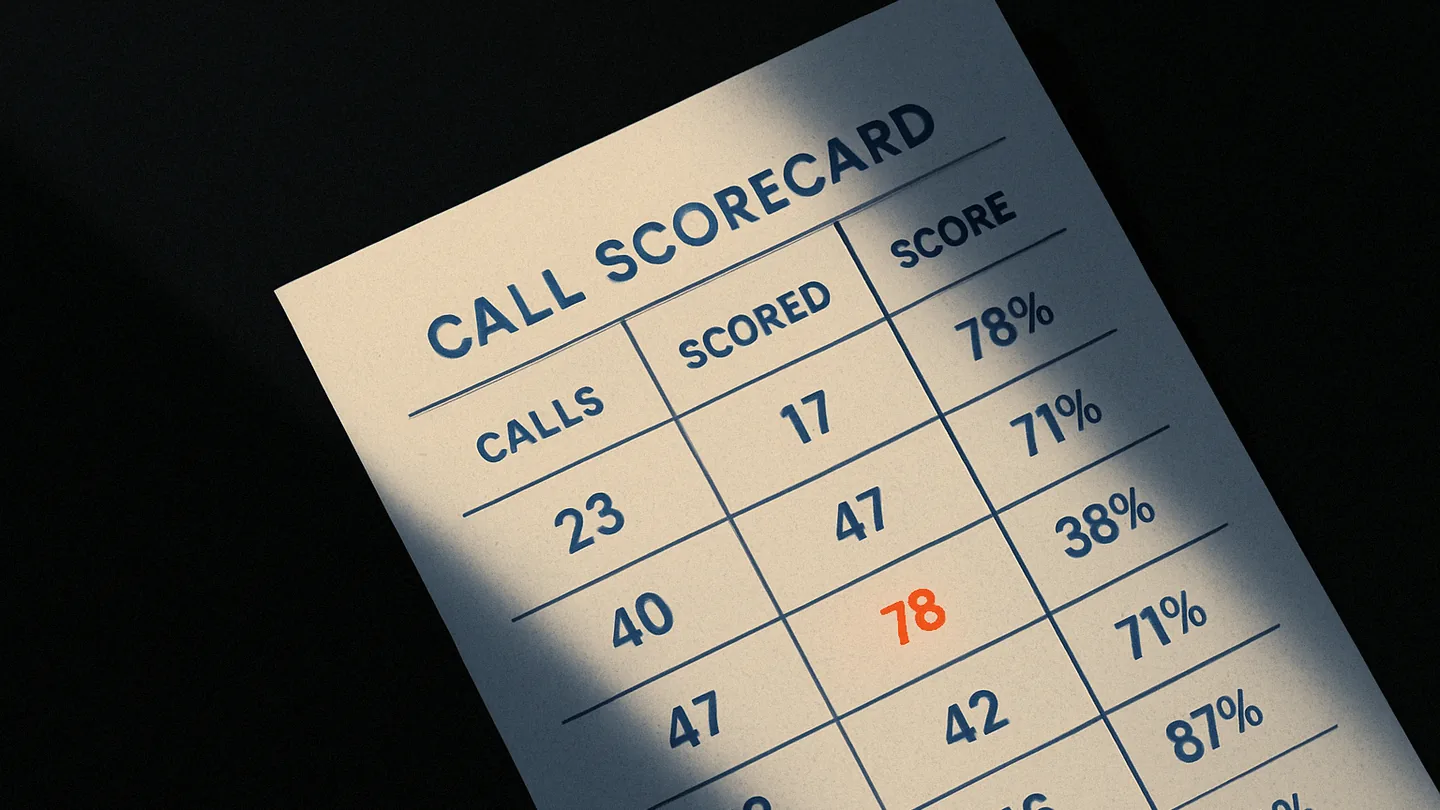
Score the call and you get a number.
Score it again with a different tool and you get a different number — both defensible, both describing the same twenty minutes.
The instinct to add it up
Quality sounds like something you can total.
Talk ratio plus sentiment plus question count plus a filler-word tally, weighted and averaged into one clean digit for a dashboard. Tidy, defensible, exportable to a spreadsheet.
It's also a category error.
Averaging assumes the things being averaged are the same kind of thing. A rep who talked 60% of the call because they were finally explaining pricing clearly isn't the same as a rep who talked 60% because they wouldn't stop pitching. The ratio can't tell them apart — it never had access to which one happened.
What the number quietly assumes
Every composite score assumes the parts add up. They don't, not here.
A perfect talk ratio next to a positive sentiment score reads like a good call. It can just as easily be a rep who never asked the one question that would have surfaced a real objection — smooth, on-ratio, and thirty minutes from a deal that's about to stall.
Gong scorecards turned exactly this gap into a running complaint: the number moves every week, the deal's actual position barely does.
The measurement that isn't a number
Effectiveness isn't unmeasurable. It's just not a scalar.
The actual test: did your own certainty about this deal change because of this conversation? Not whether you hit a ratio — whether you know something now that you didn't before the call, and whether that something is a real objection or a genuine sign the deal moved.
That's a yes-or-no judgment about this deal, not a percentage. A composite score can't produce it, because a composite score has no idea what you walked in already believing.
Why the rep is the only instrument that works
A transcript sees words. It doesn't see the objection you'd already priced in before the call started, or the one that caught you flat.
Only the person who was in the room carries that context, and only for a short window before the honest version gets smoothed into whatever they'll say in the pipeline review. AI call analysis makes the fuller case for why that window closes fast.
Sales call transcript analysis metrics breaks down the four numbers most tools default to. Worth knowing what they're good for. None of them was built to answer the question that actually matters here.
Somewhere the read doesn't get flattened into a score
Sara's built for the judgment call, not the composite one: a same-day conversation about whether this call actually changed what you know about the deal. Nothing scored, nothing averaged into a dashboard someone else checks first — rep-first, by design.
Founders Club is invite-reviewed — apply at getkeel.io/founders.
Quality was never a total
A dashboard can average a hundred calls into one trend line.
It can't tell you whether the call you just finished changed what you actually know about the deal in front of you. That's the only question measuring conversation quality was ever supposed to answer.
By the team at Keel. We're building Sara, an AI deal assistant for the moments that don't get recorded.