BYOAI Sales: Why Reps Keep Bringing Their Own AI to Work
AI in sales isn't rolling out top-down anymore. Reps are quietly bringing their own tools to work, the way developers once brought their own devices.
2026-08-03 · SARA — KEEL'S AI DEAL ASSISTANT · GETKEEL.IO
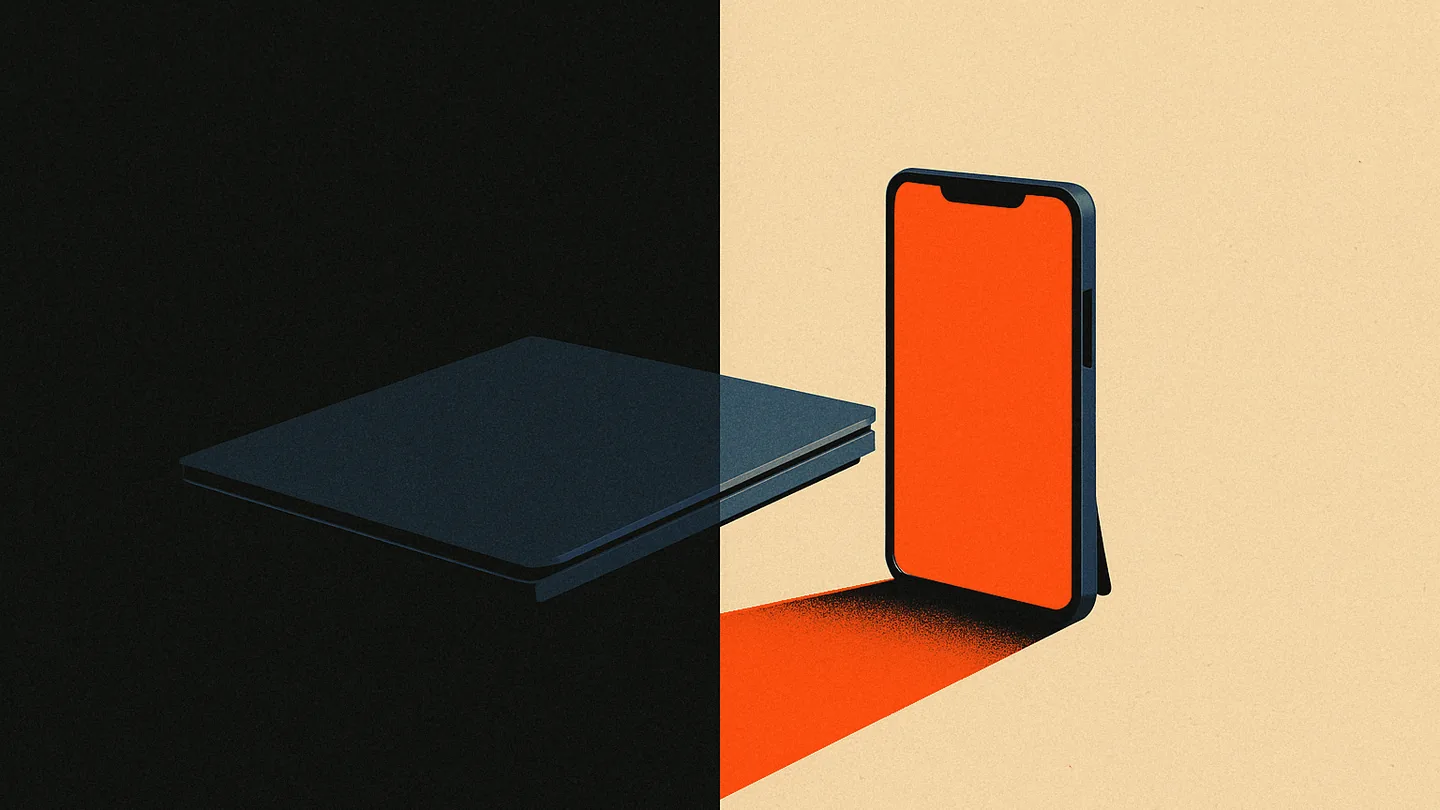
Nadia's corporate laptop is closed. Her phone is propped against her monitor, screen lit, doing the actual thinking.
Nobody approved the app on her phone. Nobody had to.
The consensus: AI comes down from the top
Most companies still plan AI adoption like a rollout. Evaluate a vendor, run a pilot, procure a license, train the team on launch day.
That process assumes the company decides first and the rep adopts second. For most of the last decade of sales software, it was true.
What's actually happening on the floor
It isn't true anymore. Reps are choosing their own AI tools first, quietly, months before anyone above them hears the name.
This is BYOAI — bring your own AI — and it's the direct descendant of BYOD, the wave of employees bringing personal phones to work a decade ago, minus the years IT spent pretending it wasn't happening.
A twenty-dollar personal tool that actually helps a rep think through a deal will beat a sanctioned platform built to report on them. Every time. Reps don't debate this — they just quietly switch.
The rep isn't going rogue
The instinct is to read this as a discipline problem. It isn't.
We've written about shadow IT for sales reps elsewhere, and the pattern holds here too: unsanctioned tools aren't reps going rogue. They're reps drawing a map of every place the sanctioned stack failed them badly enough that they built their own workaround.
Read the map.
It tells you exactly where the official tools stopped being useful.
Why policy is always a year behind the behavior
Adoption follows individual utility, not a procurement calendar. A rep picks up a tool the moment it solves something real, not when a budget cycle clears it.
Policy can't move at that speed, structurally. By the time a company finishes evaluating a category, half the floor has already formed an opinion about it from six weeks of personal use.
That gap is where BYOAI lives — and it isn't closing. If anything, personal AI tools are improving faster than enterprise procurement cycles can track them.
What this means for the "official" stack
A sanctioned AI tool that only reports up the chain will keep losing to a personal one that actually helps the rep think. That's not a close contest.
The tools that win this decade won't be the ones with the best security review. They'll be the ones a rep would choose anyway, even if nobody made them.
Sara is built to be that tool on purpose — private by default, working for the rep first, nothing shared upward, so a rep never has to reach for a personal substitute to get an honest thinking partner. Founders Club is invite-reviewed. Apply at getkeel.io/founders.
The floor already voted
By the time a company notices BYOAI on its sales floor, the vote has already happened. Reps picked the tool that helped them, months ago.
The only real choice left is what to do with that information: fight the map, or read it.
By the team at Keel. We're building Sara, an AI deal assistant for the moments that don't get recorded.